At 88, Paul Turner's father still comes into the family butcher's shop for a couple of hours each day. It is the detail Turner returns to when describing a business that began with his grandfather in Aldershot in 1956.
“For our family, it has always been more than a business,” he tells Booze in a written interview.
His brother Kevin now runs the shop with Kevin's son George, the fourth generation. Paul joined in 1982 and stepped away from the shop in 2024 to concentrate on the wider Alf Turner brand. The shop and the business bearing his grandfather's name have become different parts of his working life.
That distinction matters when the conversation turns to pork scratchings. The snacks now rely on a specialist manufacturer, and a newer crackling line is intended to appeal to people who find a traditional scratching too hard. Behind the familiar packet is a question about what a family food business carries forward when it grows beyond its original premises.
A family story with a newer chapter
Alf opened the shop at 205 North Lane after nearly 20 years in the Royal Army Service Corps, according to the family's account. After his death in 1973, Paul's father and his brothers ran the business.
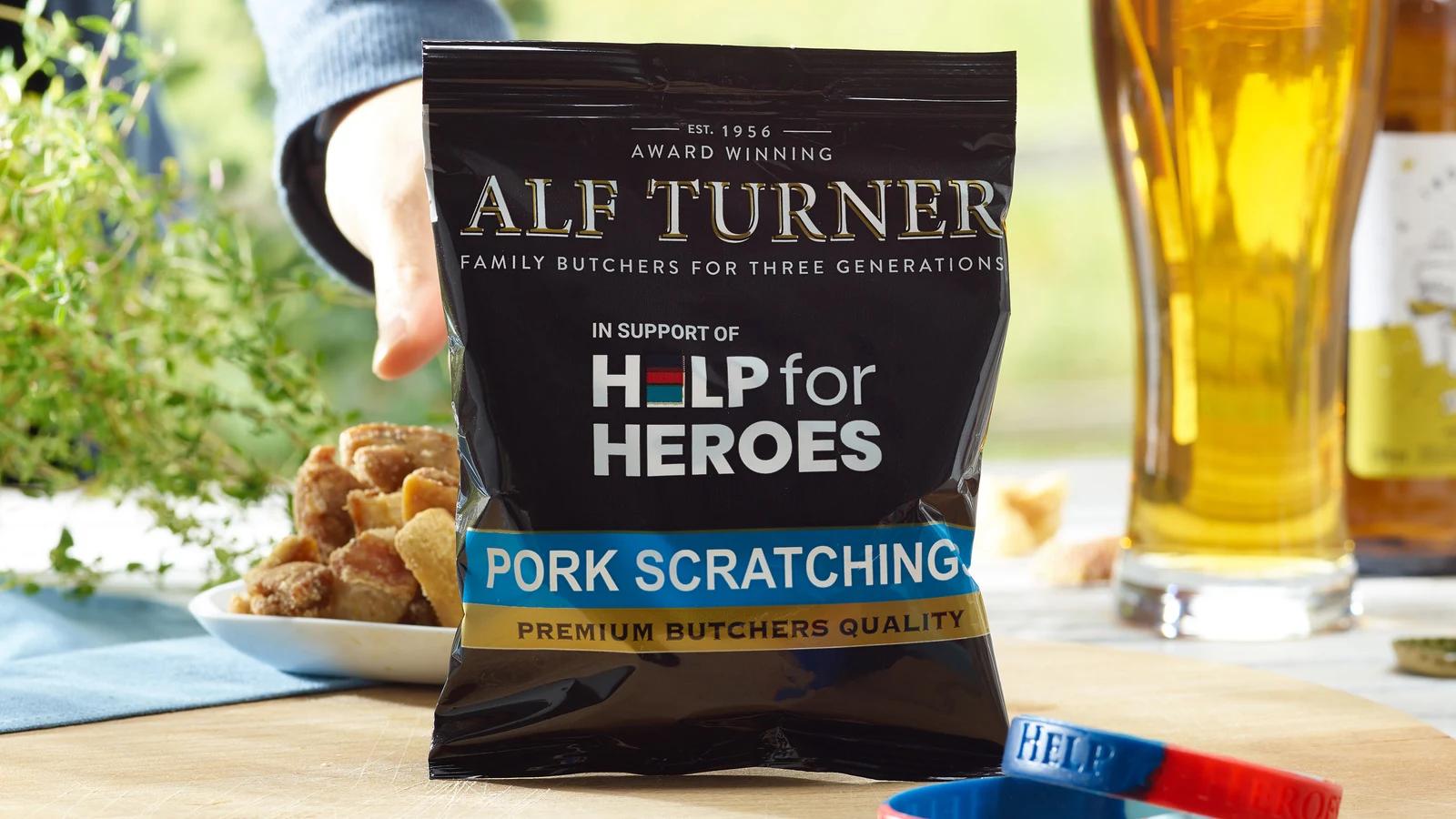
That military history also informs the business's partnership with Help for Heroes, whose own account traces Paul's support to his grandfather's service. Aldershot is known as the home of the British Army. Turner says the business has now raised more than £345,000 for the charity.
When Paul talks about recipes and skills handed down from his grandfather, he is principally talking about sausages: preparation, seasoning and the judgement of a butcher. The pork-snack range came much later. Turner dates the launch of traditional scratchings and chilli crackling to 2015; a traditional, non-chilli crackling followed in 2024.
The distinction is worth keeping. An old family business need not be selling exactly what its founder sold. Here, the experience came first; the bagged pub snacks were a later way of putting it to work.
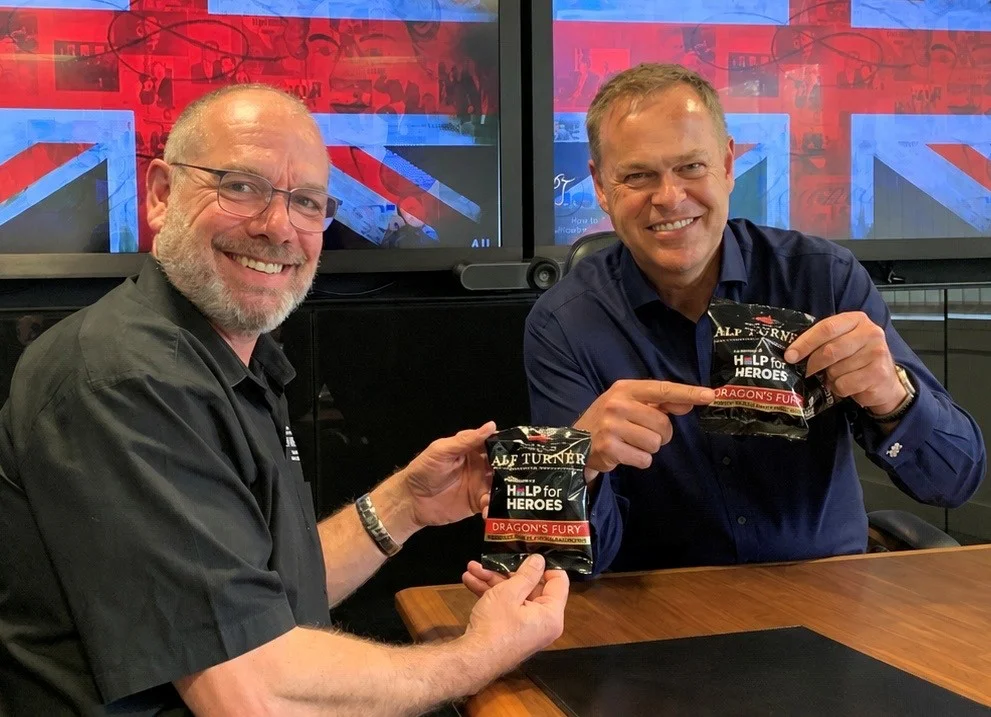
There was a conspicuous step towards a wider market before the snacks arrived. Turner appeared on Dragons' Den in 2012. Peter Jones's account of the investment confirms that he put in £80,000 for a third of the business, when Turner was seeking to take his sausages to national retailers.
For Turner, the value was partly in getting buyers to listen. He says Jones's involvement gave the business credibility with major buyers. Making something and getting it onto a pub's shelf are different jobs.
A pub snack with regional roots
“For me, they are part of the fabric of the great British pub,” Turner says of scratchings.
There is evidence for their place in regional food culture beyond a manufacturer's fondness for them. The Media Archive for Central England catalogue records an ATV Today item from 12 September 1972 in which reporter Sue Jay discussed pork scratchings, black pudding and faggots with the Black Country Society's Winston Homer.
The programme's opening question was whether Britain's entry into the Common Market would help traditional British foods sell in Europe. The prospect of finding new customers for familiar food was already there more than half a century ago.
Today, the Black Country Living Museum's food trail includes scratchings at its Bottle & Glass Inn. Neither source establishes who invented them. Both place the snack within a regional food culture larger than any one brand.
For Turner, the pub appeal is the savoury richness alongside beer. His preference is a cask bitter or ale with traditional scratchings, and an IPA with chilli crackling. Those are a butcher's suggested pairings, rather than rules for the bar.
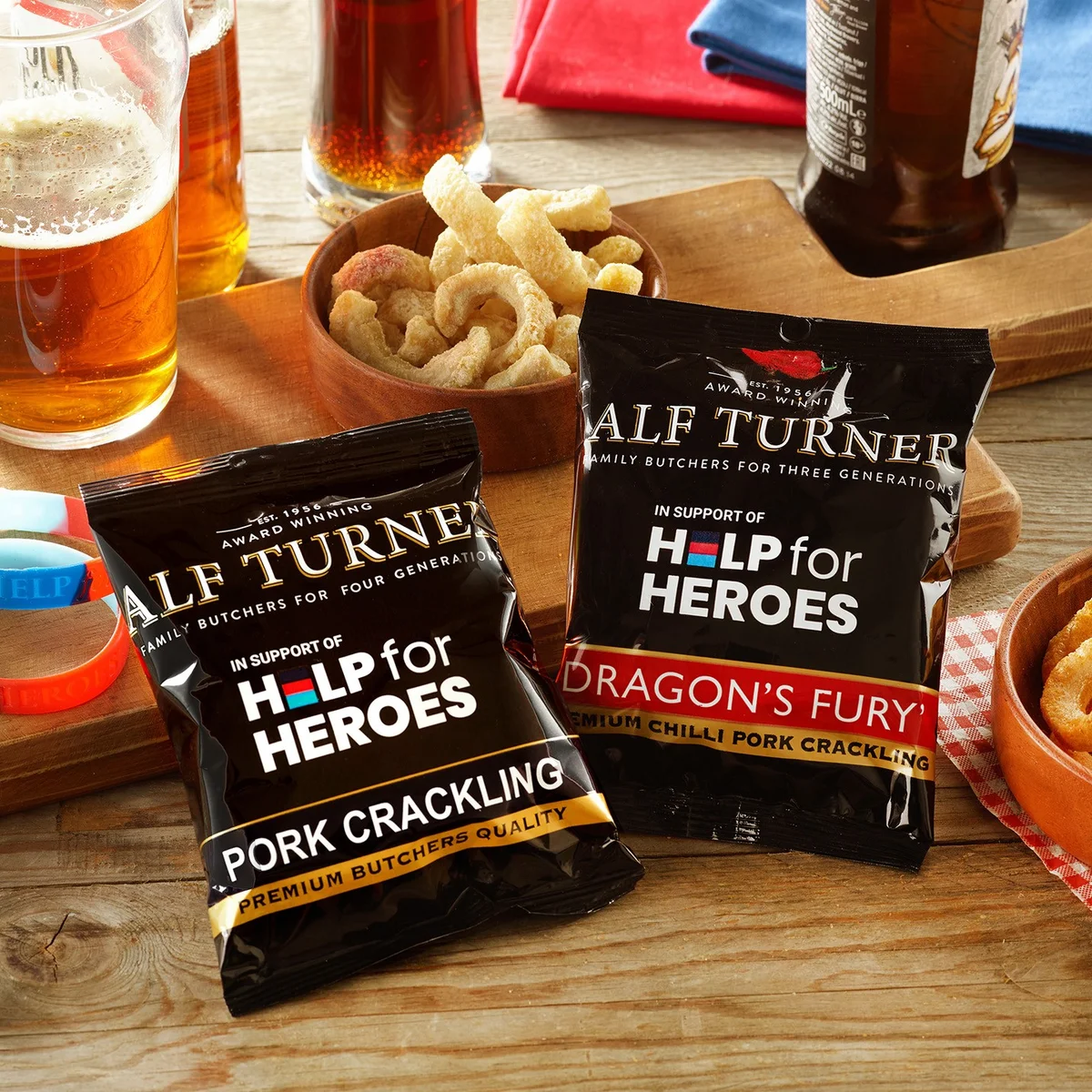
The difference is in the bite
The names can be confusing. In Turner's description, scratchings tend to be thicker, harder and denser, often retaining fat beneath the cooked rind. Crackling is usually lighter and crisper; pork puffs are the most expanded of the three.
These are useful distinctions, not a universal specification. The rind, the amount of fat left on it, preparation, drying and cooking all affect the result.
“Different producers use different processes, so these are general category distinctions rather than a description of our manufacturer's exact method,” he says.
The importance of processing is more than a matter of terminology. A 2024 study in Food Science & Nutrition measured how drying and frying conditions affected pork rind, including its expansion and the force needed to break it. Longer frying reduced breaking force at one temperature but increased it at a higher one. The research concerns fried rinds generally, not Turner's products, but shows why a crunch cannot be explained by seasoning alone.
For a customer who finds a hard scratching unappealing, that distinction is the point. Turner says the lighter bite was the reason for adding the traditional crackling line in 2024. The intended change was in the eating experience, without requiring the customer to choose chilli.
His account suggests that winning over a new buyer may be as much about texture as flavour. It is one producer's experience, rather than a verdict on the entire market, but a useful consideration for a publican deciding what to put behind the bar.
Beyond the family shop
Reaching more people also changed where the work happened.
“As the business developed, it became clear that we would need to move beyond our own butchery production capabilities to fulfil the volumes required,” Turner says in a follow-up email.
He says a specialist manufacturing partner supplied the necessary capacity. His description of the choice centres on consistency and retaining the characteristics he wanted in the products.
The Aldershot shop and the wider snack business therefore tell related but different stories. One is still run by family members behind the counter. The other depends on a specialist producer making to the standards Turner says he wants to preserve.
Scale brings other pressures. Turner lists ingredients, manufacturing, packaging, energy, labour and distribution among the costs the business has had to manage. He describes the challenge as keeping the product affordable for pubs and their customers while resisting a cheaper specification.
Back in Aldershot, the fourth generation is running the shop and the second still comes in. Alongside that continuity, the snack business has introduced different textures and moved beyond the family's own production capacity.
For Turner, carrying a butchery tradition into a wider market has involved changing one of the snack's defining qualities. Some customers still want the hard, old-fashioned bite. Others would prefer their pub snack to put up less of a fight.